
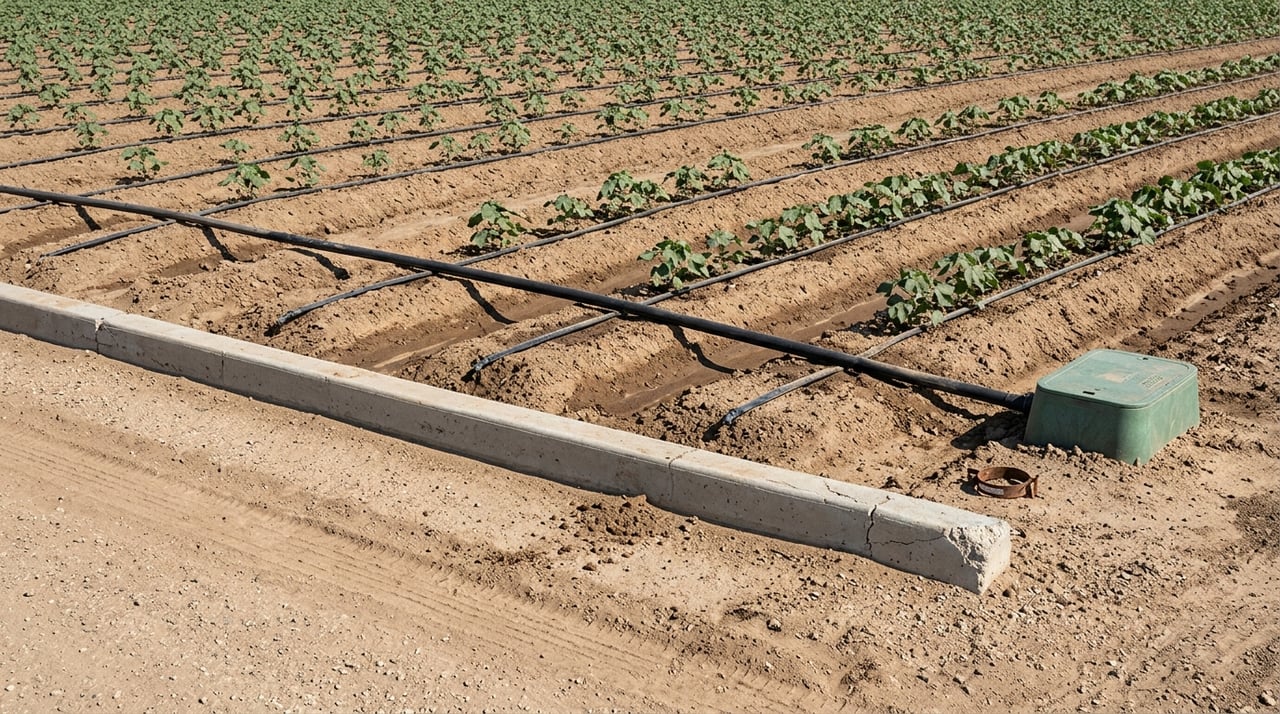
If you own farmland around Tranquillity, deciding whether to sell or hold can feel less like a simple real estate question and more like a long-term business decision. You may be weighing water uncertainty, family plans, lease income, tax questions, and what the land could be worth in today’s market. This guide will walk you through the key factors shaping that choice in western Fresno County so you can think through your next move with more clarity. Let’s dive in.
Tranquillity sits in one of the most productive agricultural regions in the country, but it is also in a part of the Central Valley where water conditions can reshape land decisions quickly. Fresno County reports 1.88 million acres of productive farmland, with agricultural operations covering nearly half of the county’s 3.84 million-acre land base. In 2024, county agricultural production reached $9.03 billion, which shows how much value is tied to working land here.
That local farm economy is also broad and crop-driven. Fresno County says growers produce more than 350 crops, and the county’s leading commodities include grapes, almonds, pistachios, tomatoes, cattle and calves, poultry, milk, peaches, garlic, and nectarines. Around Tranquillity, farmland value often depends more on whether the ground can support profitable irrigated production than on any nearby residential growth story.
Westlands Water District places Tranquillity in its western Fresno and Kings service area. The district reports more than 563,000 irrigable acres, about 297,794 producing acres, and 242,712 fallowed acres in its 2025 crop report. That combination of active production and significant fallowed ground tells you something important: not every acre carries the same outlook, and water access can make or break a hold strategy.
If you are trying to choose between selling and holding, water should usually be the first question, not the last. California’s Sustainable Groundwater Management Act, or SGMA, requires groundwater sustainability planning in medium- and high-priority basins. The goal is to reduce overdraft over time, and state oversight can step in if local plans do not meet requirements.
For landowners near Tranquillity, that matters because future water availability remains uncertain even with the Westside Subbasin plan approved in 2023. On top of that, Public Policy Institute of California analysis says at least 500,000 acres of southern Central Valley cropland will likely need to come out of irrigated production to reduce water demand. In plain terms, some land will become harder to farm profitably under future water limits.
That does not mean every parcel should be sold. It does mean the strength of a hold decision often rises or falls with dependable water access, district status, and your realistic operating outlook over the next several years. If water is strong and the ground remains productive, holding may still make sense. If water risk is rising and carrying costs are becoming harder to justify, selling may deserve a closer look.
Farmland values in California are still high by national standards. USDA NASS says California cropland averaged $17,330 per acre in 2024, while irrigated cropland averaged $20,200 per acre. Those numbers help explain why some owners are tempted to sell while values remain historically strong.
At the same time, market signals are not pointing in just one direction. AgWest’s February 2025 update says land values across the West were generally stable, but California has faced pressure from tighter water conditions and lower prices for almonds, walnuts, table grapes, and wine grapes. It also notes rising inventory in parts of California and longer listing times across the San Joaquin Valley.
That mix matters around Tranquillity. A seller may still find opportunity, but buyers are likely to look closely at water reliability, crop economics, and any restrictions tied to the property. In a market like this, pricing and positioning need to match the land’s real operating potential, not just broad statewide averages.
Holding farmland can be the stronger choice when the property still offers dependable long-term utility. That is especially true if the land has usable water access, supports viable crops, and fits your family’s long-range plans. In those situations, ownership may preserve flexibility while giving you time to watch how water policy and the market evolve.
You may also prefer to hold if the land is part of a family transition plan. USDA’s 2024 TOTAL survey shows that farmland succession is a major issue nationwide, with about 43 million acres expected to transfer within five years. The survey also found the average principal landlord age was 69.2, which reflects how often land decisions are tied to retirement, heirs, and estate planning.
If your goal is to keep the property in the family, a hold strategy can buy time to organize ownership, determine roles, and evaluate whether the next generation wants to farm, lease, or sell later. In that case, the best choice may not be immediate action. It may be a structured pause with a clear plan.
Selling and holding are not the only two options. Leasing can offer a practical middle ground if you want income from the property without handling day-to-day farming yourself. For many Tranquillity-area owners, that can be a way to preserve ownership while reducing management burden.
UC ANR says California farm leases generally fall into two main categories: cash rent and crop-share. With cash rent, you receive a fixed payment while the tenant takes most of the production and price risk. With crop-share, the owner and tenant share both income and risk.
UC ANR also notes that flexible-rent and labor-share leases exist, and that any lease should be legal, fair, understood, and written. If you are unsure about selling because the family is not ready, or because you want to wait for better market conditions, leasing may help bridge that gap.
| Lease type | How it usually works | Best fit for |
|---|---|---|
| Cash rent | You receive a set payment | Owners who want predictable income |
| Crop-share | You share revenue and risk | Owners comfortable with more variable returns |
| Flexible rent | Rent adjusts based on agreed factors | Owners who want some downside and upside balance |
Selling may make more sense when the land’s risks are starting to outweigh its practical value to you. That can happen if water uncertainty is reducing the farm’s outlook, if operating or holding costs are becoming a burden, or if family transition issues make continued ownership difficult. Sometimes the right decision is not about maximizing theoretical future value. It is about reducing complexity and preserving present value.
You may also lean toward selling if there is no clear successor, no workable lease path, or no desire to keep managing the property. In those cases, a sale can convert a complicated asset into liquidity and simplify estate or retirement planning. The key is to assess the parcel as it actually performs today, not as you hope it might perform under better conditions.
Around Tranquillity, buyers for agricultural ground are likely to study water district status, producing history, fallowing patterns, and legal restrictions carefully. That means a well-prepared sale matters. Before bringing land to market, it helps to have a clear understanding of the property’s strengths, limitations, and documentation.
County planning rules can change the answer to sell or hold very quickly. Fresno County says its General Plan is designed to protect agricultural resources over the long term. If you are thinking about splitting, converting, or repositioning farmland for a different use, you need to verify what the county allows before building that into your decision.
Williamson Act status is especially important. Fresno County says these contracts allow landowners to restrict land to agricultural or open-space use in exchange for lower property-tax assessments based on use value. The California Department of Conservation says Williamson Act contracts bind future buyers, continue on a rolling term with a nonrenewal process, and can be cancelled only with specific findings and a fee equal to 12.5% of current fair market value for a standard contract or 25% for a Farmland Security Zone contract.
That can have a major effect on valuation and exit strategy. If your land is under contract, a buyer is not simply purchasing acreage. They are also stepping into the property’s existing restrictions and timeline.
Fresno County’s Right-to-Farm notice also matters. The county says subdivisions within 300 feet of AE, AL, TPZ, or RC zoning require notice, and that agricultural uses should not become nuisances simply because nearby conditions change. If your decision depends on future redevelopment or division potential, check zoning and filing requirements before assuming the land can support that plan.
If you are unsure which path makes sense, start by working through the decision in order. That can help you separate emotional attachment from real-world property performance. It also helps you identify where professional guidance may save time and cost.
The right answer around Tranquillity is rarely one-size-fits-all. In general, holding or leasing tends to look stronger when water is dependable, crop economics remain workable, and ownership goals are clear. Selling tends to look stronger when water risk, regulation, costs, or family transition issues begin to outweigh the land’s operating value.
If you want a grounded, local read on your options, the team at Boyd Realtors can help you think through farmland value, market positioning, and the practical steps involved in a Tranquillity-area land decision.

We pride ourselves in providing personalized solutions that bring our clients closer to their dream properties and enhance their long-term wealth. Contact us today to find out how we can be of assistance to you!
BRIAN ELLSWORTH | CA DRE# 01230440
CHERIE SMITH | CA DRE# 01442806
KEN BOYD | CA DRE# 00323505
[email protected]
275 S Madera Ave Ste 100
Kerman CA 93630
CA DRE# 02127943 | NMLS# 2109517
8AM-5PM MONDAY-FRIDAY and by appointment