Buying a home in Madera is exciting, but the loan process can feel like alphabet soup. Conventional, FHA, VA, USDA — where do you start, and what actually matters here in Madera County? You want a clear, local guide that helps you plan your budget, pick the right loan, and close on time.
This article breaks down the main loan types, what lenders look for, Madera-specific property issues, timelines, and real closing costs. You will also find a document checklist and tips to avoid delays. Let’s dive in.
Loan options at a glance
Choosing a loan depends on your credit, cash on hand, and the property’s location and condition.
| Loan type |
Typical down |
Mortgage insurance or fees |
Good fit in Madera |
| Conventional (Fannie/Freddie) |
3% to 20%+ |
PMI if under 20% down, removable with equity |
Buyers with solid credit buying typical single-family or condos in and around the City of Madera |
| FHA |
3.5% |
Upfront and annual MIP, removal rules differ from PMI |
Buyers with lower credit or smaller down payments, often for entry-level homes |
| VA |
0% for eligible |
VA funding fee applies in most cases, some exemptions |
Eligible veterans and active-duty buyers when the property meets VA standards |
| USDA (Rural Development) |
0% for eligible |
Upfront guarantee fee and annual fee |
Buyers purchasing in USDA-eligible rural areas of Madera County, subject to income and location rules |
Important notes for Madera:
- Conforming and FHA loan limits are set by county and change each year. Check the latest Madera County limits through FHFA and HUD before you shop.
- USDA eligibility is property-specific. Many rural parts of Madera County qualify, while denser areas in the City of Madera may have fewer eligible tracts.
What lenders look for
Lenders focus on your ability to repay and the property’s condition.
- Credit score and credit history.
- Debt-to-income ratio and stable income.
- Down payment, reserves, and overall loan-to-value.
- Property type and condition, including required utilities and safe access.
Better credit, lower debt, and a higher down payment can improve pricing. Loan terms like 15-year versus 30-year also affect your rate and payment.
Madera property factors that impact loans
Local property features can help or slow a mortgage. Plan ahead for:
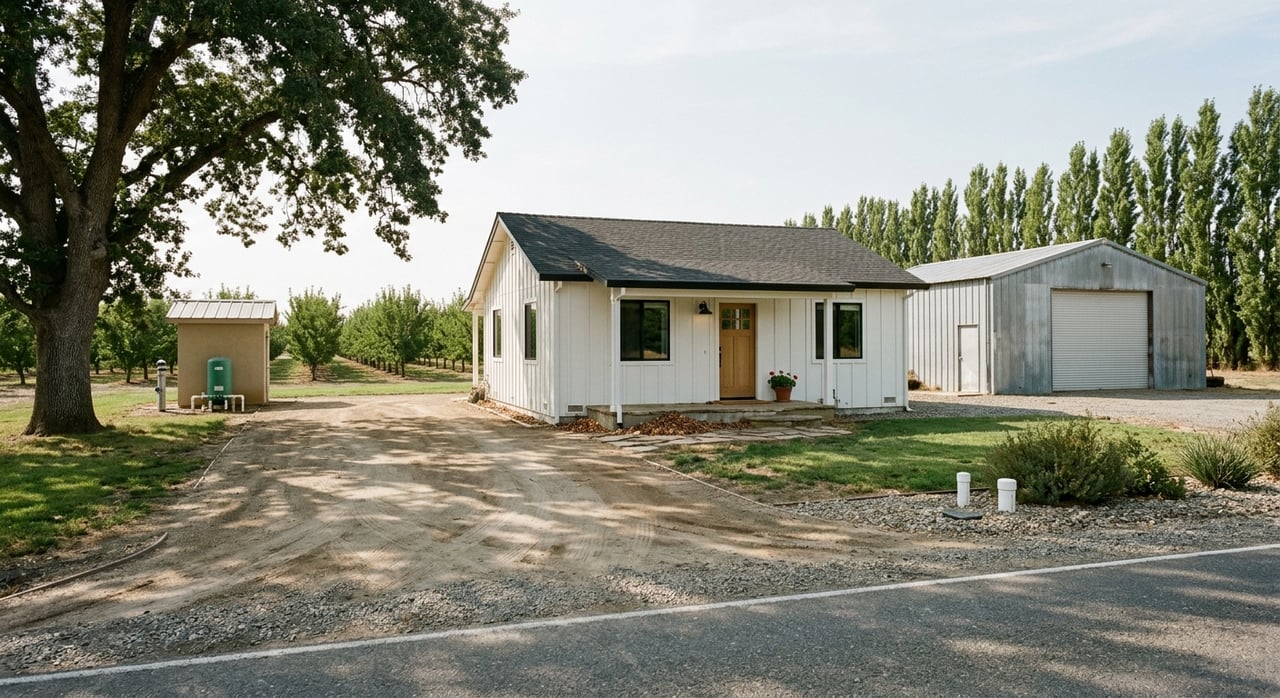
- Rural utilities. Private wells, septic systems, and gravel roads often require specific inspections and repairs. FHA, VA, and USDA have condition and safety standards.
- Flood zones. If a home is in a Special Flood Hazard Area, lenders typically require flood insurance. You can check FEMA flood maps and plan for the premium in your budget.
- Manufactured homes. Lenders may require permanent foundation certifications, HUD labels, and age requirements. Not all programs allow every manufactured or mobile home.
- Acreage and mixed-use. Residential properties with significant acreage or agricultural elements can face specialty appraisal and larger down payment requirements.
From pre-approval to closing
Understanding the steps helps you set expectations and avoid last-minute requests.
Pre-qualification vs. pre-approval
- Pre-qualification is an estimate based on what you tell a lender.
- Pre-approval verifies income, assets, and credit, and produces a letter you can use with your offer.
- Timing can range from one day to a week, depending on how quickly you provide documents.
What happens after your offer is accepted
- Loan Estimate arrives within 3 business days of a completed application.
- Appraisal is ordered and typically completes in 1 to 2 weeks, depending on availability.
- Underwriting often takes 1 to 3 weeks, with conditional approval and additional document requests.
- Closing Disclosure must be delivered at least 3 business days before signing.
- Typical contract-to-close timeline in California is 30 to 45 days. VA and USDA loans can take longer if appraisals or eligibility checks need extra time.
Escrow and title in California
Transactions commonly use an independent escrow and title company. Escrow coordinates instructions, title vesting, HOA documents when applicable, and funds. Buyers and sellers negotiate who pays certain closing costs as part of the offer.
What it costs to close
Closing costs usually include lender fees, escrow and title fees, recording, and prepaids for taxes and insurance. A common range is 2% to 5% of the purchase price, but local practices vary. Review your Loan Estimate carefully and compare lenders.
A few cost drivers to understand:
- Points and buydowns. You can pay points to lower your rate or use a temporary buydown structure like 2-1.
- Mortgage insurance. Conventional loans use PMI that you can remove with sufficient equity. FHA uses upfront and annual MIP with different removal rules. VA has a funding fee for most borrowers and no PMI. USDA has an upfront guarantee fee and annual fee.
Down payment help and special programs
If cash is tight or you are a first-time buyer, explore assistance programs.
- CalHFA programs can pair with conventional or FHA loans to help with down payment and closing costs, subject to income and purchase price limits.
- GSFA and other nonprofits may offer assistance, depending on eligibility and funding cycles.
- USDA offers zero-down options for eligible buyers in qualifying rural areas with income limits.
- VA offers zero-down options for eligible veterans and active-duty service members.
- Madera County or City housing offices and HUD-approved counseling agencies can share current program availability and education resources.
Program details, limits, and rates change often. Check live program pages and speak with experienced local lenders.
Your document checklist
Gathering documents early speeds up pre-approval and underwriting.
- Government ID and Social Security number or tax ID.
- Last 2 pay stubs and last 2 years of W-2s or 1099s.
- Last 2 years of federal tax returns if self-employed or commission-based.
- Bank statements for the last 2 to 3 months for all accounts.
- Retirement or brokerage statements if using those funds.
- Gift letter and transfer documentation if receiving gift funds.
- Explanations for large deposits or recent credit inquiries.
- Purchase contract and HOA documents once you are under contract.
- Proof of homeowner’s insurance before closing.
Tips to choose the right loan in Madera
Use these steps to narrow options confidently.
- Match the loan to your profile. Credit, income stability, and savings will guide whether conventional, FHA, VA, or USDA fits best.
- Consider the property’s location. If you are shopping outside the City of Madera in lower-density areas, check USDA eligibility and property condition standards.
- Plan for the full cost. Price out both down payment and closing costs, and compare PMI, MIP, or program fees over time.
- Verify local loan limits. Confirm the current FHA and conforming limits for Madera County before you set your price range.
- Ask about timing. If you need a fast close, talk with your lender about appraisal capacity and program-specific timelines.
Common roadblocks and how to avoid them
A little planning reduces surprises.
- Wells and septics. Order proper inspections early and budget for potential repairs.
- Flood zones. Confirm insurance needs upfront to avoid closing delays.
- Manufactured homes. Confirm foundation certifications and HUD labels early.
- HOA documentation. Make sure the HOA provides required documents quickly if you are buying a condo or in a planned community.
- Large deposits. Be prepared to document sources for any unusual bank activity.
The bottom line for Madera buyers
Home loans in Madera work like anywhere else, but local property features and program rules can change the details. If you line up your documents, get a strong pre-approval, confirm loan limits, and plan for the property’s condition, you can move from offer to keys with fewer surprises.
If you want local guidance from a team that coordinates lending and appraisal referrals and understands rural and city homes across the Central Valley, we are here to help. Schedule a Consultation with Boyd Realtors.
FAQs
What is the difference between FHA and conventional loans for a Madera purchase?
- FHA typically allows 3.5% down and is more flexible on credit, with upfront and annual mortgage insurance, while conventional can start at 3% to 5% down for strong borrowers and uses PMI that can be removed with equity.
Are USDA loans available in Madera County and how do I check eligibility?
- Many rural areas in Madera County can be USDA-eligible based on the property address, while denser parts of the City of Madera may have fewer eligible tracts, so you should confirm eligibility and income limits on USDA’s site.
How long does a home loan closing take in Madera, California?
- A typical timeline from accepted offer to closing is about 30 to 45 days, with VA and USDA sometimes taking longer if appraisals or eligibility checks need extra time.
How much cash do I need to buy a home in Madera, including closing costs?
- Down payments range from 0% for eligible VA and USDA buyers to 3.5% for FHA and 3% to 20% or more for conventional, plus typical closing costs of about 2% to 5% of the purchase price.
What documents will my lender require when buying in Madera?
- Expect to provide ID, Social Security number or tax ID, recent pay stubs, two years of W-2s or 1099s, bank statements, tax returns if self-employed, asset statements, gift documentation if needed, the purchase contract, HOA documents if applicable, and proof of insurance.
Will flood zones or septic systems affect my mortgage approval in Madera?
- Yes, properties in Special Flood Hazard Areas usually require flood insurance, and homes with wells or septic systems often need inspections and may require repairs to meet program standards.
Can I get down payment assistance in California for a Madera home?
- Programs like CalHFA, GSFA, USDA, and VA can help eligible buyers with down payment or offer low to zero down options, though availability and terms change, so you should review current program rules and limits.