
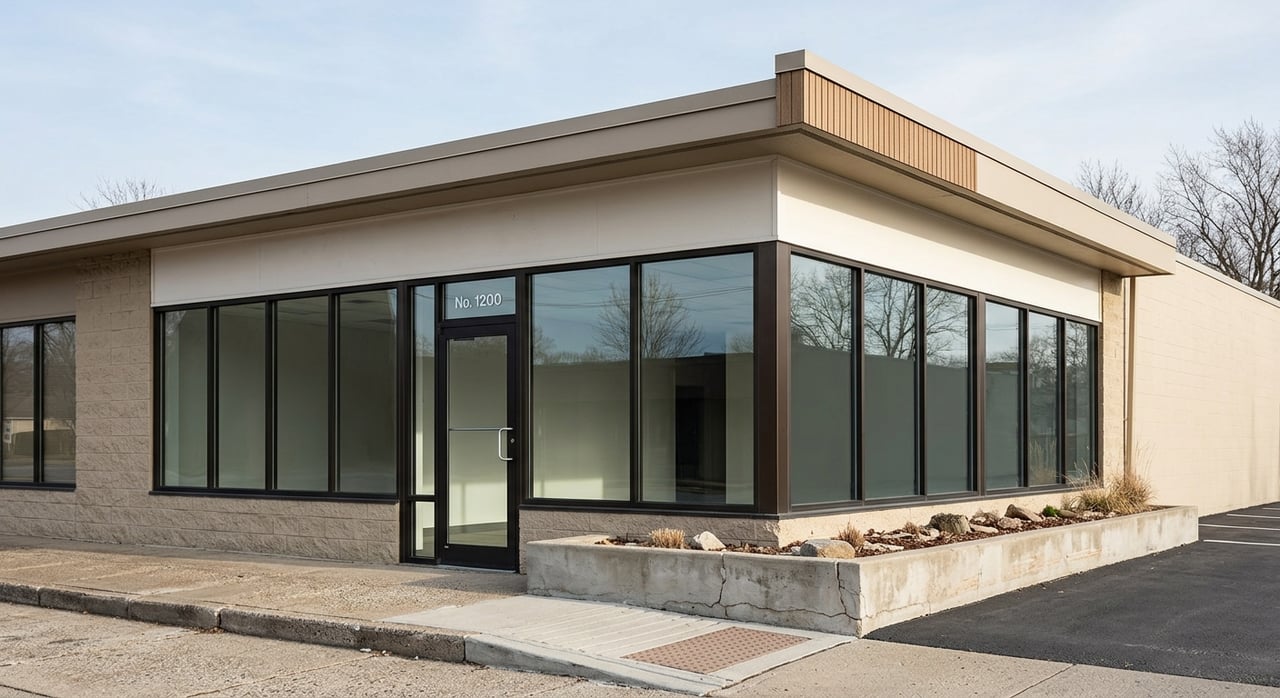
Thinking about buying a small commercial building in Kerman? You are not alone. For local business owners and investors, these properties can offer a practical way to build long-term value, but success usually depends on more than just price per square foot. If you understand Kerman’s land-use patterns, common building types, lease structure, and city review process, you can make a much more confident decision. Let’s dive in.
Kerman is a growing Central Valley city with an estimated population of 17,553 as of July 1, 2025, up from 16,016 in the 2020 Census. Located about 16 miles west of Fresno, it sits in a position that can appeal to local owner-users, service businesses, and investors looking for a smaller market with room to grow.
The city’s General Plan points to two big themes: revitalizing the historic commercial core and supporting investment in the southern industrial area. Kerman’s economic development efforts also focus on business recruitment, retention, expansion, and local service-sector growth, which helps explain why small commercial properties matter here.
Kerman also shows meaningful local business activity. Census data reports $234.2 million in total retail sales in 2022 and $31.6 million in accommodation and food services sales. Recent city-listed projects such as Denny’s, Valero, Dutch Bros, an express car wash, truck parking, and a chemical business suggest demand for service-oriented, auto-oriented, and light industrial uses.
In Kerman, evaluating a small commercial building is often as much about allowed use as it is about value. The city’s land-use diagram includes Mixed Use, Neighborhood Commercial, General Commercial, Service Commercial, Regional Commercial, Office, and Industrial designations.
The city also makes clear that development standards are carried out through zoning. Kerman’s Planning Division handles annexations, plan amendments, pre-rezones, conditional use permits, site plan reviews, and environmental assessments. That means before you get too far into pricing, you need to confirm whether the property actually fits your intended use and what approvals may be required.
Kerman’s General Plan directs retail activity toward the Madera Avenue and Whitesbridge Avenue corridors. Regional Commercial land along those corridors is intended for shopping centers and larger retail formats, while Neighborhood Commercial supports stores, restaurants, personal services, repair uses, medical, office uses, and central gathering places.
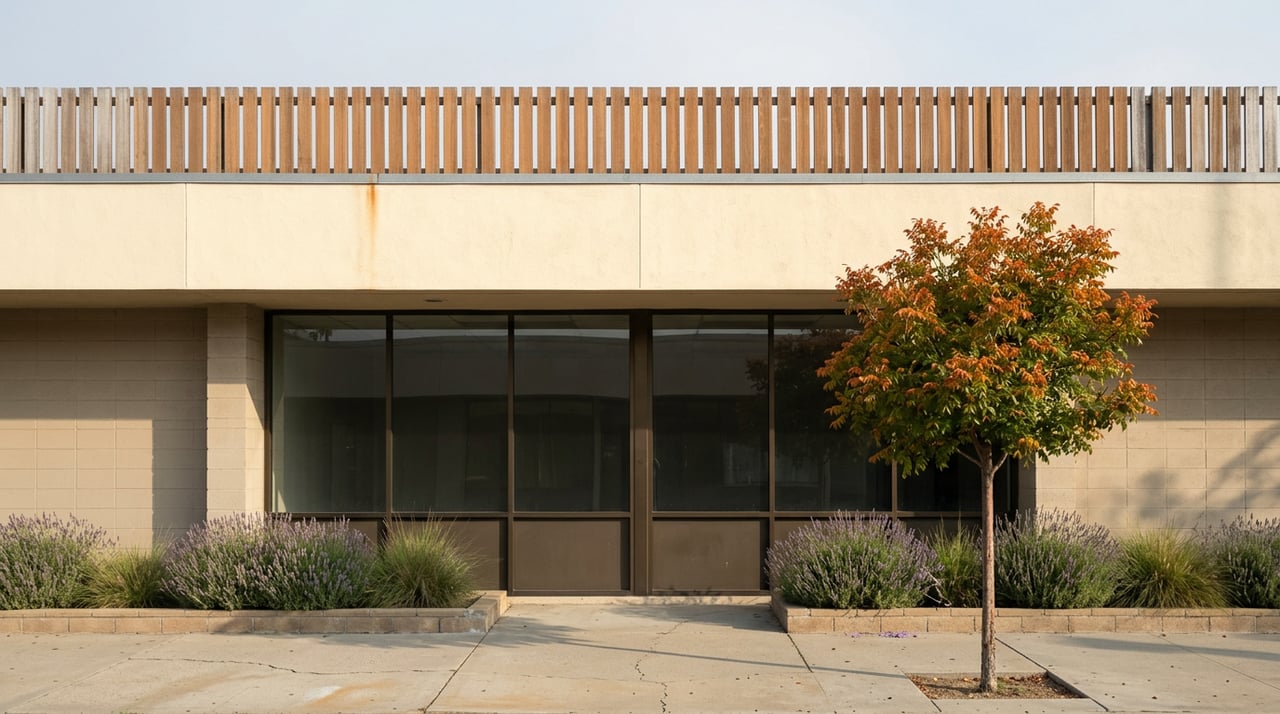
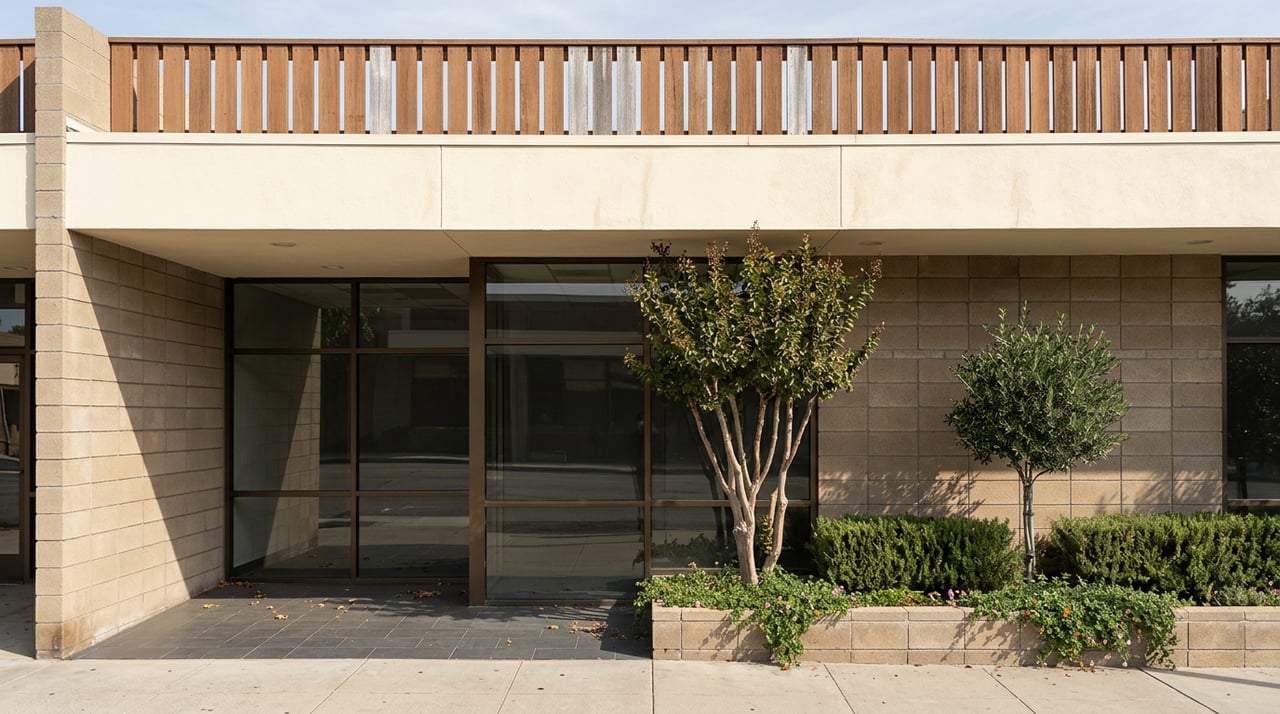
For many buyers, that means the most realistic opportunities are street-front storefronts, small strip-center bays, and mixed-use retail buildings. In this type of property, value often comes down to visibility, frontage, access, parking, and how well the use fits local traffic patterns.
The city also wants to improve circulation, parking, pedestrian facilities, and food-service options downtown. If you are considering a retail building near the core, those goals can shape how the property functions over time.
Service Commercial areas in Kerman are generally south of California Street and on some properties north of Whitesbridge Avenue. These areas are intended for light manufacturing, warehousing, distribution, corporation yards, wholesale uses, accessory business offices, and employee-serving retail or service uses.
The Industrial designation, generally south of the Southern Pacific Railroad and north of Jensen Avenue, also supports manufacturing, processing, warehousing, and some service-commercial uses. For buyers looking at small warehouse or flex properties, site details matter. The General Plan highlights front-yard landscaping, off-street parking, screened storage, and site-plan review, which can all affect cost and usability.
These properties fit Kerman’s broader economy. The General Plan states that nearly 20 percent of the labor force is in agriculture-related occupations, with transportation, production, manufacturing, and distribution also playing important roles. Because of that, small industrial and service-commercial buildings may appeal to contractors, distributors, ag suppliers, storage users, and light industrial operators.
Kerman’s Office designation is intended for office uses and for some single-family dwellings that may be converted to office uses in the future, including areas near Madera Avenue in the original townsite. That can create opportunities for smaller buyers who want an office location with a practical footprint.
Mixed-use buildings can also be worth a close look, but they tend to need more careful review. The General Plan notes that mixed-use projects may combine residential and nonresidential components, and some mixed-use or multifamily projects may require a conditional use permit in certain zones.
For you as a buyer, layout efficiency, parking, accessibility, and conversion cost are major issues in office and mixed-use properties. If the building has more than one type of tenant, expense allocation and lease language become even more important.
Before you fall in love with a building, confirm the parcel’s allowed use, parking requirements, signage rules, and whether a conditional use permit, site plan review, or zoning action may be required. Kerman’s Planning Division handles these steps, and the city also provides notice information for applicants seeking business licenses and commercial building permits.
This step matters because a property that looks ideal on paper may not match your actual business or investment plan. In a market like Kerman, entitlement and use-rights questions can shape value just as much as rental income.
For retail, look closely at visibility, access, parking, and corridor location. For warehouse and service-commercial properties, review yard configuration, storage screening, circulation, and whether the site design fits the intended operation.
In small commercial properties, site functionality often carries more weight than flashy finishes. A building may be modest, but if the access, parking, and use fit are right, it can still be a strong asset.
A small commercial building can look attractive until you see how the expenses are split. Lease structure often determines whether the income is stable or whether the owner is left carrying more cost than expected.
BOMA guidance describes several common structures:
The main point is simple: read the lease before you rely on the rent roll. A lower asking price or strong face rent does not always mean stronger returns.
When buyers and lenders review a commercial property, the goal is usually to understand its net operating income, or NOI. That means starting with expected rent, adjusting for vacancy, and then subtracting operating expenses.
Important expense categories commonly include:
Common-area maintenance and repair costs are generally passed through under operating-expense provisions, while capital improvements are usually treated differently unless they reduce operating expenses or are required by new laws.
Commercial underwriting usually comes down to a few core numbers. The OCC defines debt-service coverage ratio, or DSCR, as NOI divided by annual debt service. Cap rate is stabilized NOI divided by sales price, and debt yield is NOI divided by debt.
For you, the takeaway is practical. You want to know whether the property’s income can support the loan payment and whether the risk matches the price. In a smaller market like Kerman, it is wise to be conservative with rent assumptions, vacancy, and comparable data.
Some small commercial buildings are easier to re-lease or resell than others. The OCC notes that specialized properties can be less marketable and harder to liquidate, especially in a weaker market.
That matters in Kerman for purpose-built sites such as gas stations, car washes, truck parking facilities, and other highly specific improvements. These properties can still work well, but they usually require extra caution because the pool of future users may be narrower.
If you are buying a building for your own business, financing options may depend on how the property will be used. SBA 504 loans can finance existing buildings, land, new facilities, and improvements, but not speculation or investment in rental real estate.
SBA 7(a) loans can be used to acquire, refinance, or improve real estate and buildings. For many first-time commercial buyers, that makes 7(a) a common starting point when the purchase is tied to an operating business.
Because financing, valuation, and property use all connect, it helps to have a team that can coordinate the moving parts early. That can reduce surprises later in the process.
The City of Kerman’s Economic Development page points users to LoopNet and CoStar under “Available Real Estate,” which shows how important online commercial marketing has become in the local market. These platforms help put local listings in front of buyers beyond town limits.
Crexi also plays a major role in commercial marketing by packaging pricing, photos, property details, and market data in a format buyers can compare by asset type and location. For sellers, this broader exposure can make a meaningful difference.
For a small Kerman asset, these tools help buyers compare inventory and help sellers present the facts that matter most, including use, rent, expenses, zoning, and site characteristics. That is one reason local market knowledge and strong commercial presentation still matter, even in a smaller city.
If you are looking at small commercial buildings in Kerman, keep your process grounded in the basics:
In a market like Kerman, a good commercial purchase is often the result of local knowledge and careful review, not guesswork. The right building is not just one that looks promising online. It is one that fits your use, your numbers, and the city’s rules.
If you are ready to explore a small commercial building in Kerman, working with a local brokerage that understands the city, the corridors, and the approval process can save you time and help you make a stronger decision. For practical local guidance on commercial opportunities in Kerman and the Central Valley, schedule a consultation with Boyd Realtors.

We pride ourselves in providing personalized solutions that bring our clients closer to their dream properties and enhance their long-term wealth. Contact us today to find out how we can be of assistance to you!

BRIAN ELLSWORTH | CA DRE# 01230440
CHERIE SMITH | CA DRE# 01442806
KEN BOYD | CA DRE# 00323505
[email protected]
275 S Madera Ave Ste 100
Kerman CA 93630
CA DRE# 02127943 | NMLS# 2109517
8AM-5PM MONDAY-FRIDAY and by appointment