
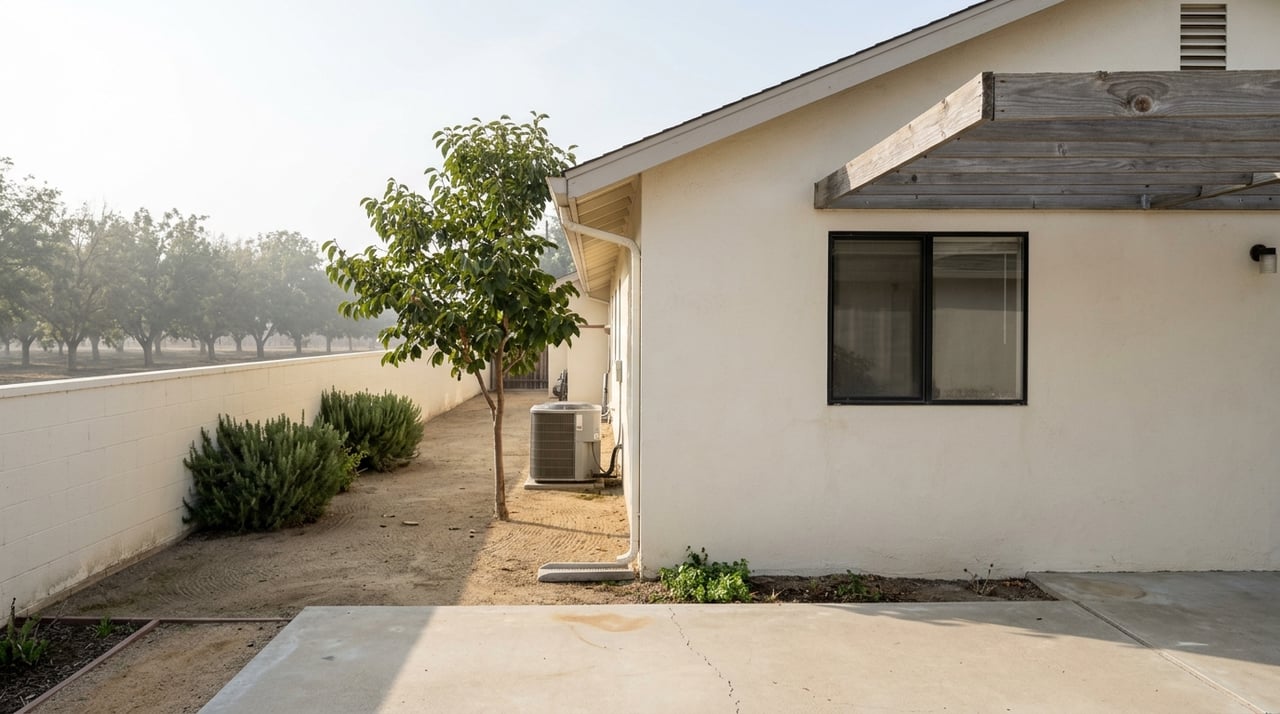
Ask about home prices in San Joaquin and the conversation is short. This is one of the more affordable corners of Fresno County, a one-square-mile city in the west county farmland once nicknamed the Sweetheart City, as Business View Magazine describes it. Ask about building something new here and the conversation gets longer fast.
That gap matters if you're comparing San Joaquin to other Central Valley towns on price alone. A low number on a lot doesn't mean a low number to build on it. City leaders in San Joaquin have said as much themselves, and the paper trail behind one specific 44-unit project on Main Street shows exactly where the extra cost and time come from.
Fresno County's median resale price sat near $405,000 in early 2026, with homes taking nearly two months to sell, based on figures presented at the Fresno County Economic Development Corporation's April 2026 Real Estate Forecast. San Joaquin runs well under that county figure. It's a small city, geographically compact, built around a few generations of the same families staying put. Mayor Julia Hernandez has described it as the kind of place where everybody knows everybody, the sort of town people leave for college and then come back to raise their own kids in.
That's the appeal for a buyer scanning listings by price. It's also where the comparison usually stops, because the sticker price on an existing home in San Joaquin doesn't tell you anything about what it costs to add a new one.
City Manager Elizabeth Cabrera has been direct about this: construction costs in San Joaquin run notably higher than in nearby cities, even though the city's median household income sits around $45,000. That's the reverse of what you'd expect from a small, low-cost market. Usually cheaper land and a smaller labor pool produce cheaper construction. San Joaquin's remote position, roughly 45 minutes from the nearest larger urban center, works against it instead. Fewer contractors bid on projects out this far, materials cost more to deliver, and any sizable development has to plug into water and sewer systems built for a much smaller town than city leaders now want to become.
That last part isn't hypothetical. San Joaquin has already spent money to get ahead of it.
"Our sewer system has undergone extensive upgrades, and our wastewater treatment plant now can support a community twice our size."
Business View Magazine quotes City Manager Elizabeth Cabrera describing infrastructure the city built in anticipation of growth that hasn't fully shown up yet in new rooftops. The city is also managing a documented water quality issue. A manganese exceedance notice posted on the city's own site flags discoloration in the municipal water supply, the kind of detail a buyer touring homes here should raise directly with the seller rather than assume a standard inspection will catch.
San Joaquin has roughly 1,000 residential rooftops today. City officials have said their pending housing initiatives, taken together, could increase that total by as much as 40 percent if they clear approval. That's a meaningful jump for a town this size, and it's why a single project on Main Street carries so much weight in the overall count.
That project is Main Street Townhomes, a 44-unit development of duplex-style single-family homes on a 5.06-acre site, with individual units ranging from about 3,500 to 5,700 square feet, according to the project's filing with the state's CEQA database.
To build it, the developer isn't just pulling a permit. The city has to change its own rulebook first. The project requires:
The project requires three approvals under San Joaquin's current zoning and General Plan. Its proposed attached housing and zero-lot-line design do not fit the current code, so the requested changes must be approved before construction can proceed. That review process takes months, sometimes longer, and every month on a construction loan is money a builder eventually has to recover somewhere, usually in the price of the finished home.
For a buyer or small investor lining San Joaquin up against Kerman, Firebaugh, or Mendota on a spreadsheet, the price per square foot on an existing home only tells half the story. Most of what's currently for sale here is older housing stock, not new construction, and that's not an accident of taste. The costs and approval process described above help explain that. Anyone hoping to build rather than buy resale should budget time for the same kind of zoning conversation Main Street Townhomes has been having, even on a much smaller project.
The city's own bets point toward more of this eventually. A sewer plant sized for double the current population and a planned microtransit partnership with the Fresno Council of Governments, aimed at cutting the isolation of a 45-minute drive to bigger services, both signal a city trying to get ahead of growth it expects but hasn't fully seen yet. If projects like Main Street Townhomes clear their approvals, they become the template for what the next parcel's timeline and cost structure look like too.
Why are home prices so low in San Joaquin compared to the rest of Fresno County? The town is small, geographically remote, and built mostly around existing single-family homes rather than new development, which keeps resale prices well under the county median.
Is new construction actually happening there right now? One documented project, Main Street Townhomes, is moving through the city's zoning and environmental review process. As of its most recent filing, it still needs a zone change, a General Plan Amendment, and a text amendment before it can break ground.
What should I ask about before buying an existing home in San Joaquin? Ask directly about the water source and any manganese-related discoloration, since the city has posted an official exceedance notice on its own site. Don't assume it will surface automatically in a standard inspection report.
A low number on a listing in San Joaquin is real. So is the extra time and cost baked into anything new built there. If you're weighing this town against others in the Central Valley, or trying to figure out whether a specific parcel is worth pursuing through the zoning process, Boyd & Associates works these towns closely enough to walk you through both sides of that math before you commit to either one. Schedule a consultation and bring your questions about the parcel, not just the price.
This article is general information, not legal, tax or financial advice. Consult a qualified professional about your situation.

We pride ourselves in providing personalized solutions that bring our clients closer to their dream properties and enhance their long-term wealth. Contact us today to find out how we can be of assistance to you!
BRIAN ELLSWORTH | CA DRE# 01230440
CHERIE SMITH | CA DRE# 01442806
KEN BOYD | CA DRE# 00323505
[email protected]
275 S Madera Ave Ste 100
Kerman CA 93630
CA DRE# 02127943 | NMLS# 2109517
8AM-5PM MONDAY-FRIDAY and by appointment